Authentic Interaction: The Other “AI” Students Need Now
The push to prepare students for an AI-powered world is gaining traction. System leaders are asking how to build AI literacy at scale. How do we equip students to use powerful AI tools responsibly, fluently, and across disciplines?
This is urgent work. But it cannot be the only work.
The AI Opportunity and Cost
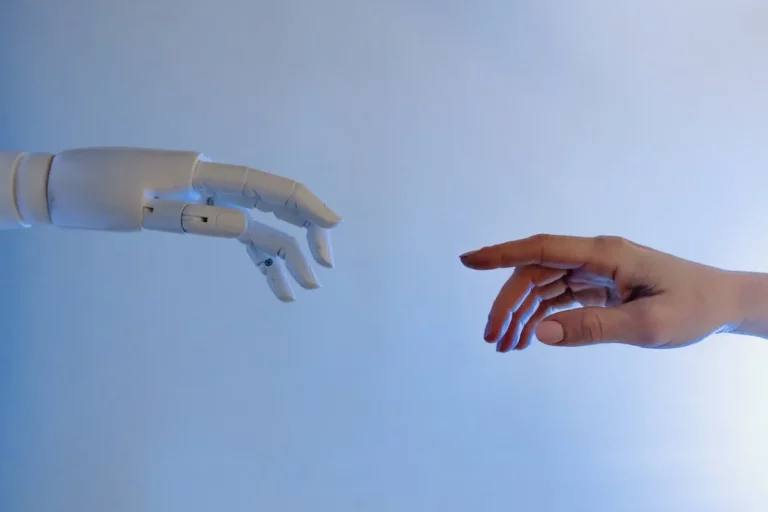
As we accelerate toward an AI-integrated future, we risk ignoring the other half of the equation: Are we also preparing students to be fully human? To be relationally responsible and emotionally fluent, in and beyond school?
My take? We aren’t.
Why? Because in today’s world, real conversation is rare, even among adults. Yet conversation is how the most meaningful and deeply human parts of life happen. It can and must be explicitly taught in schools. And soon.
The consequences of declining communication skills are already showing up in classrooms (students disengage), in relationships (rates of loneliness, anxiety, depression, and addiction are rising), and in life readiness (Gen Z is struggling in the workplace, and younger kids find basic interactions—like ordering at a restaurant—intimidating).
Yes, AI can automate instruction and free up teachers to focus on what only humans can do. AI can personalize content, but it can’t build trust. It can analyze writing, but it can’t teach empathy. It can generate answers, but it can’t help a student find their voice. It can simulate dialogue, but it can’t replicate the shared human experience of a great group discussion.
That work belongs to teachers. And it always will.
We Say We Value Communication, but Rarely Teach It
The future of education depends on preparing students not just to absorb information, but to think critically, communicate effectively, and engage meaningfully with the world around them. R.E.A.L. Discussion® helps schools deliver on that promise by embedding explicit instruction in real-world communication skills into the academic core.
So often, schools treat communication as something that “just happens.” It’s everywhere and nowhere. Leaders name it in their Portraits of a Graduate or strategic plans, but they don’t teach it with intention or rigor. Real-world communication is relegated to hoped-for outcomes from a set of amorphous activities, not designed-for competencies rooted in research and practice. And in a world where many kids would rather text than talk, these skills will not emerge naturally.
We can’t leave foundational human skills to chance. That’s why I created R.E.A.L. Discussion®.
R.E.A.L. Makes Human Skills Teachable and Measurable
As a teacher, I watched students withdraw from real-world relationships because live communication felt hard. I read beautiful essays from students who were too scared to speak up in class. I spoke with colleagues who said the same thing in different ways: “I believe in student voice. But I don’t have the tools to make discussions rigorous or equitable.”
Then came the wave of EdTech “solutions” with platforms that moved discussions online, increasing written participation but bypassing the skills students need most: speaking, listening, and thinking in real-time.
More than a decade later, R.E.A.L. Discussion® is a research-informed, practice-proven program for schools ready to embed communication into the academic core.
R.E.A.L. was built in classrooms, alongside teachers. Every routine, tool, and assessment has been shaped through hands-on co-creation and cycles of feedback and refinement. By staying close to teachers and students, we identify what works, improve what doesn’t, and evolve in response to real-world needs.
Through teacher training, implementation guides, assessment tools, and strategic support, R.E.A.L. prepares students to engage—really engage—with content, peers, and the world around them. It’s authentic interaction made teachable and scalable.
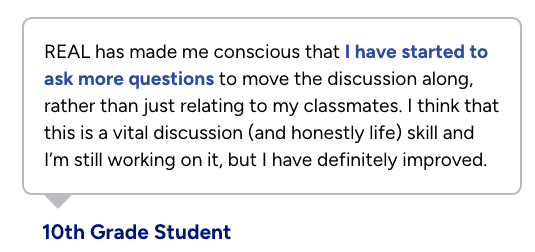
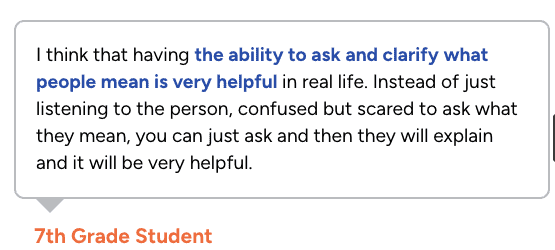
R.E.A.L. positions discussion where it belongs: at the center of rigorous instruction and student growth, not just as a method, but as a measurable outcome. Students who learn R.E.A.L. say it builds confidence, deepens focus, and eases anxiety.
This isn’t theory. It works. And it’s working in classrooms across the country.
AI Can’t Replace the Human Advantage
If we are serious about preparing students for the future, we cannot prioritize technology over humanity. We need both. Artificial intelligence may shape the tools of the future, but authentic interaction shapes us.
Even as AI opens new doors for innovation, it cannot replace what makes us most human: our ability to connect through authentic, face-to-face conversation.
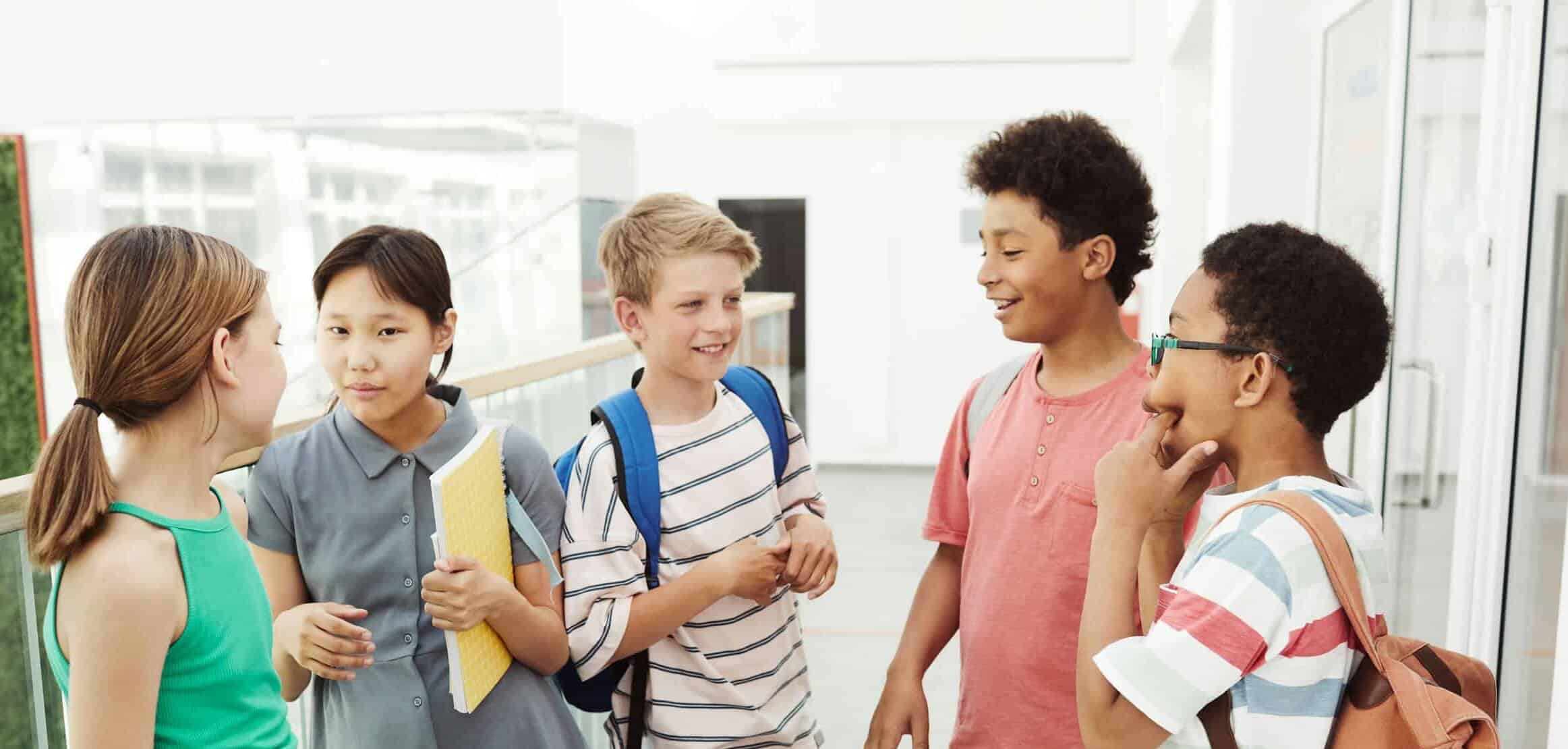
R.E.A.L. protects and cultivates this defining human advantage. We help students listen deeply, think critically, and speak with clarity and purpose in both real-time and real-life situations.
One academic leader recently reinforced that these are “not soft skills, but power skills for the future.” He’s right.
Listening is not a soft skill, and communication is not a byproduct of learning. It is learning.
If AI is the future, then authentic interaction must be the present.
The good news? At R.E.A.L., we already know how to teach it.
If AI is the future, then authentic interaction must be the present.
Liza Garonzik, R.e.A.L. Discussion
Join the Conversation
I’d love to hear about how your classroom, school, district, or organization is approaching this moment. Are you finding ways to build both AI fluency and human fluency into your programs? What’s working? What’s missing?
This article was originally posted on R.E.A.L. Discussion’s LinkedIn where we’d love to continue this conversation.